Showing posts with label Septuagint. Show all posts

Friday, May 1, 2020

The Lexham English Septuagint


I was quite excited when I saw that a new English translation of the Septuagint was coming out. I'm always interested in new Septuagint resources. 


The Septuagint is an old, Greek translation of the Hebrew Old Testament. Some (or all?) of the manuscripts of the Septuagint that we have today are much older than the Hebrew manuscripts on which most of our English Old Testaments are based so it can be pretty useful in textual criticism and Bible study as well (Some quotations that the Apostles made, from the Septuagint, are significantly different than our current Hebrew Old Testament text).


 If an English speaking person says they're quoting from "the Bible", we don't associate "the Bible" as only referring to one particular translation (unless you're KJV only). When we talk about the "Septuagint", it's sort of like saying  "the Greek translation of the Old Testament", it's just a shorter way of saying it.  There were several old, Greek translations of the Bible and we don't know which one is the 'original' one that was around in the Apostles' time and that they would have utilized.  Also, there doesn’t seem to be a reason to think that there was only one Greek translation during the time of the Apostles, there may have been more than one, and good and bad translations, just like we have today with good and bad English translations. Since we don't know exactly which Greek Version(s) the Apostles used, it's good to have a variety of copies of the LXX, the English translation of the Greek translation in my case, since I don't really know Koine Greek.


 This  translation is a nice one to add to this list, it is particularly interesting because of the way they give more, unique translations that you may not have otherwise considered.  For instance, in the Psalms, one of the "headers" I'm used to seeing is usually something like,  "To the Chief Musician: A Psalm of David".  In one of the other English LXXs I have, the NETS Bible, it is translated, "Regarding Completion.  A Psalm.  Pertaining to Dauid."   Well, this new translation, has, "For the End: A Psalm of David". When I saw that it was a like a lightbulb turned on.  "For THE END?"  As in, the "End times", "last days", the end of the world? 


I mentioned it to one of my sisters (who loves studying and learning koine Greek), and she looked up the word for "end" and it was telos, which is used in some other places in the Bible to refer to the end times (For instance, Matt.  24:13-14).  That sort of put a whole new perspective on the Psalms, not that we didn't think any of them were prophetic before (obviously the Messianic ones were), it's just that, if this view is correct, many of these Psalms are directly said to be speaking about the end times.  Some of them certainly sound eschatological, for instance, "Our God is a place of refuge and strength, a helper when afflictions find us very much.  On account of this, we will not fear when the earth is troubled and the mountains are transferred in the hearts of the seas…Come, see the works of the Lord, which he set as wonders upon the earth.  Removing wars until the ends of the earth, he will crush bow and shatter weapon…." (Psalm 45: 1-10)


Another interesting nuance in translation is Amos 9:1. The ASV (Using the Masoretic text) reads:  "I saw the Lord standing beside the altar: and he said, Smite the capitals, that the thresholds may shake…"


Brenton's English LXX reads: "I saw the Lord standing on the altar: and he said, Smite the mercy-seat, and the porch shall be shaken"


The LEX reads, "I saw the Lord standing by the alter, and he said, 'Strike upon the lid of the Ark of the Covenant and the gateway will be shaken…"


That's interesting in that, if it is the Ark of the Covenant, then that would (If I remember correctly)be a later reference to it in the Old Testament, than in the current Hebrew Old Testament we use. I don't remember the Ark of the Covenant being mentioned again after the fall of Jerusalem to Nebuchadnezzar.  Just an interesting thing.


You'll notice some significant/interesting differences between this text and the Masoretic.  If you grab a Hebrew based Old Testament and turn to Daniel 11:1-2, I'll quote it from the ASV: "And as for me, in the first year of Darius the Mede, I stood up to confirm and strengthen him. And now will I show thee the truth. Behold, there shall stand up yet three kings in Persia; and the fourth shall be far richer than they all: and when he is waxed strong through his riches, he shall stir up all against the realm of Greece."And then compare it to this English Septuagint:   "And in the first year of King Cyrus, he spoke to me to strengthen me and to make me act valiantly.  And now I have come to impart the truth to you.  Look, three kings have arisen in Persia, and a fourth will arise…."  That's a rather significant difference as it changes who the coming Kings are.  Are we supposed to count starting from Darius or Cyrus? Makes for some interesting eschatological problems. 


One of the main reasons the Septuagint is so interesting is that there are places in the New Testament where, when Christ and the Apostles quote certain texts from the Old Testament and their quotations line up significantly more with the LXX than with the Masoretic text.  And that's where I want to explain a part in this translation that I didn't particularly like. In Psalm 39 (Psalm 40 in a 'regular' Bible) vs 7 is translated, "You did not want sacrifice and offering, but you restored a body to me."  "Restored", instead of, "prepared" or "made" a body for me as English translators often render that word in translating the author of Hebrews' quotation of that verse in 10:5. Now some may point out that it's still better than the Masoretic text  (the Hebrew text recension pretty much all of our Old Testaments are based on now), which doesn't say anything similar. The problem I have is that, to me, "Restored" sounds as though a body was had, taken away or lost, and then given back.  It just seems to carry a different picture from how the author of Hebrews saw/read the text in Hebrews 10 (and the Greek word there seems to be the same as the one in Swete's Greek text for the Psalm).  The author of Hebrews seemed to view that verse as indicating that a body was prepared for Christ to offer it as a sacrifice.  Now I can see a way around it by saying, "well, look at it this way, 'restored' makes it seem as though He'd been given a body back that he'd had before, so maybe it could be referring to the resurrection of Christ."  Ehh…maybe? But again, that's not how the writer of Hebrews seemed to read it. 


Anyway, I felt like I had to get that out.  Moving on now.


Be sure to read the Introduction to this translation, it's very interesting, telling about the translators'/editors' goal of making your experience in reading this translation like the experience of those originally reading the Greek translation.  So instead of trying to bring the terminology to match today's culture, they "bring today's reader to the ancient culture", so if the language was originally not as gender inclusive as we would be today, they stick with the more gender exclusive language.  If the original Greek translation of the Hebrew was a bit awkward, the English will read awkwardly,   "The English translation should feel idiomatic where the Greek is idiomatic.  It should feel formal where the Greek is formal.  It should feel foreign where the Greek feels foreign.  In other words, it is not only acceptable, it is positively desirable for the LES to feel like a translation, to the extent that the Greek readers would have been aware that they were reading a translation.  Ideally, the translation should be as rough or as smooth as the Greek would have seemed to a Greek reader who knew no Hebrew…"  I really appreciate that.


I like the format of this book as well. I don't want to check right now, but I’m pretty sure that all of my other English translations of the LXX have the text laid out in two columns on each page.  This one only has one column of text, so it reads like a regular book.  The cover is very beautiful as well, I was quite impressed just by its looks when I opened up the box. 


I really like the LES overall. I own several English translations of the LXX, and I have never really found one that I prefer above the others, rather, I find all of them equally great study and reference resources to have around. This one is a great edition to any collection of Septuagints.


Many thanks to the folks at Lexham Press for sending me a free review copy of this book (My review did not have to be favorable).


This book may be purchased at Christianbook.com and at Amazon.com


Wednesday, April 5, 2017

CSB (Holman) - Ultrathin Reference Bible - Brown Leathertouch

The Christian Standard Bible is a new revision of the Holman Christian Standard Bible.  They have made some changes, and it seems to me that many of those changes are toward a more literal translation, which is a good thing. 

Here are some samples:

In Matthew 19:28 the HCSB renders it:
"Jesus said to them, 'I assure you: in the Messianic Age, when the Son of Man sits on His glorious throne…" This new revision has it as, "Jesus said to them, 'Truly I tell you, In the renewal of all things, when the Son of Man sits on His glorious throne…'" - CSB

Not that I'm disputing that the renewal of all things references the Messianic age, it's just that "the renewal of all things" is a more literal rendition of what Christ said, more toward a formal equivalence rather than a dynamic one - which I believe is a safer route.

To some degree the same holds true with the following:

Daniel 9:25:"Know and understand this:  From the issuing of the decree to restore and rebuild Jerusalem until Messiah the Prince will be seven weeks and 62 weeks…" HCSB

"Know and understand this:  From the issuing of the decree to restore and rebuild Jerusalem until an Anointed One, the ruler, will be seven weeks and sixty-two weeks" CSB

1 Peter 3:1-2: "In the same way, wives, submit yourselves to your own  husbands so that, even if some disobey the Christian message, they may be won over without a message by the way their wives live when they observe your pure, reverent lives." HCSB

"In the same way, wives, submit yourselves to your own husbands so that, even if some disobey the word, they may be won over without a word by the way their wives live when they observe your pure, reverent lives."  CSB

The translators also switched "languages" in 1 Corinthians 14 to "tongues", though I still think that Languages was a good translation.

There are also noticeable changes in the way the translators interpret the text, for example, in 1 Corinthians 7, where Paul is explaining that if a husband or a wife has an unbelieving spouse who wants to leave them, that they should let them leave, they then translate his next words as, "Wife, for all you know, you might save your husband.  Husband, for all you know you might save your wife." CSB  Whereas the HCSB said, "For you, wife, how do you know whether you will save your husband?  Or you, husband, how do you know whether you will save your wife?"  - 1 Cor 7:16?   Which is a rather significant change.

There were some things that I did not like about this translation.  For instance, they seem to have caved a little bit more on the gender inclusive language - 1 John 3:17  "If anyone has this worlds goods and sees a fellow believer in need but withholds compassion from him -how does God's love reside in him?" CSB

"If anyone has this world's goods and sees his brother in need but closes his eyes to his need - how can God's love reside in him?"   HCSB  They do note that their goal is to translate the Bible faithfully, they simply change some gender specific language to gender inclusive when the text itself allows for it. I still don't think that that is necessary, but okay.   

And then there is a problem that I had with the HCSB that I still have with this revision.  One of which is that, despite saying in their introduction that their "OT Textual notes show IMPORTANT differences among Hebrew (HB) manuscripts and ancient OT versions, such as the Septuagint…(emphasis mine)", they do not include the LXX variant of Psalm 40:6, Sacrifice and offering thou wouldest not; but a BODY hast thou prepared me: (Brenton- Emphasis added), Whereas the Masoretic text (which only goes back to about 900 A.D. [or CE]), the text the Majority of our Old Testaments are based on, says, Sacrifice and offering thou didst not desire; MINE EARS HAST THOU OPENED: burnt offering and sin offering hast thou not required." (KJV - emphasis added).  The difference is extremely significant as the writer of Hebrews quotation of that verse matches the Septuagint and not our Masoretic text in that it says that God prepared a body for the speaker rather than opened his ears.   And yet they include a manuscript variant of the number of the beast, 616 - which variant is quite suspect as Irenaeus (a person who lived in the earlier days of the church who is thought to have been a follower of Polycarp a follower of the Apostle John) said that this variant was false, and that the older manuscripts did not contain it nor did those who knew the Apostles support it.  If they included this variant of the number of the beast then I do not  understand how they did not give the variant of Psalm 40 which is supported by the writer of Hebrews in the Bible!

One other thing that confused me:  The CSB is presented as having been translated directly from the original languages rather than using an existing translation as its basis. There is a chart on the website for this translation showing many translations and separating them on the basis of whether or not they are translated directly from the ancient languages as opposed to using an existing English translation as the basis.  The CSB is shown to be a translation not based upon an existing translation. But to me this seems to be contradicted by the admission that the CSB is a revision of the HCSB.   That just struck me as rather deceptive.  Perhaps I simply didn't understand the chart….

Otherwise, this is quite a nice translation  Also, this Bible is very nicely bound, with a LeatherTouch cover (it feels very nice).  The text is in two columns with a center column cross reference.  There is also a concordance at the back as well as full color maps.  All in all, very nice.


Many thanks to the folks at B&H publishers for sending me a free review copy of this book (My review did not have to be favorable).

My rating: 5 out of 5 stars
 *****

Among other websites you may purchase this Bible at Christianbook.com and on Amazon.com

Wednesday, November 2, 2016

Discovering the Septuagint: A Guided Reader

Discovering the Septuagint - A Guided Reader - by Karen Jobes is a very nice resource for those looking for an introduction to the Greek of the LXX (The Septuagint).  There are chapters dealing with selected passages from 9 books of the LXX, in each chapter there is an introduction telling you about that particular book and its translation techniques.   Then follows the  Rahlfs-Hanhart Greek text of an excerpt from that particular book and a brief examination of certain key words and phrases in each verse, notes on vocabulary and syntax. Then comes another excerpt of the Greek text and the notes on the various verses…etc.  After all of the selected texts are done being examined, then comes the NETS (New English Translation of the Septuagint) version of the passage(s) so that one may read the whole thing in English. And then finally, if verses from the chapter are cited in the New Testament, they have a table showing where in the NT the passage is referred to and a small summary of its context in the NT.

I like this study resource pretty well, and I like having an introduction to the language of the LXX.   Again, this is just an introduction to the study of the LXX, not necessarily a study resource, Jobes gives a list of recommended reference works on the LXX at the beginning of the book, as well as selected bibliography at the end of each chapter. 

I especially like that Jobes points out that each book of the LXX "potentially gives us a 'snapshot' of what the Hebrew looked like at the time of its translation".  But she seems rather contradictory when she then goes on to say that, "In places, the Greek translators of the Hebrew Bible used forms of words and interpreted their text in ways (without being able to foresee it, of course) that were more congenial to the message of the New Testament than the corresponding Hebrew texts would have been…"  But if the LXX potentially gives us a look at what the Hebrew text looked like in the days of the Apostles, why not assume that the Hebrew text of that day actually said what the Apostles quoted from the Greek?  Why do we hold our present day Hebrew text  as being the authoritative text with which to judge an older translation of an older Hebrew text?  Why not even consider the thought that perhaps the translation that various Apostles used was actually a literal translation of their Hebrew text rather than a heavily interpretative translation?

Anyway, I do like this resource, and think that it will be quite handy for those looking to be introduced to the Greek of the LXX.  I think it would be really neat if they came out with a book doing basically the same thing with the full text of the LXX…especially if they also included the variants that are found in the various Greek OT manuscripts.  


Many thanks to the folks at Kregel Academic for sending me a free review copy of this book! - My review did not have to be favorable.


One the the websites where this book may be purchased is at Christianbook.com

Wednesday, August 13, 2014

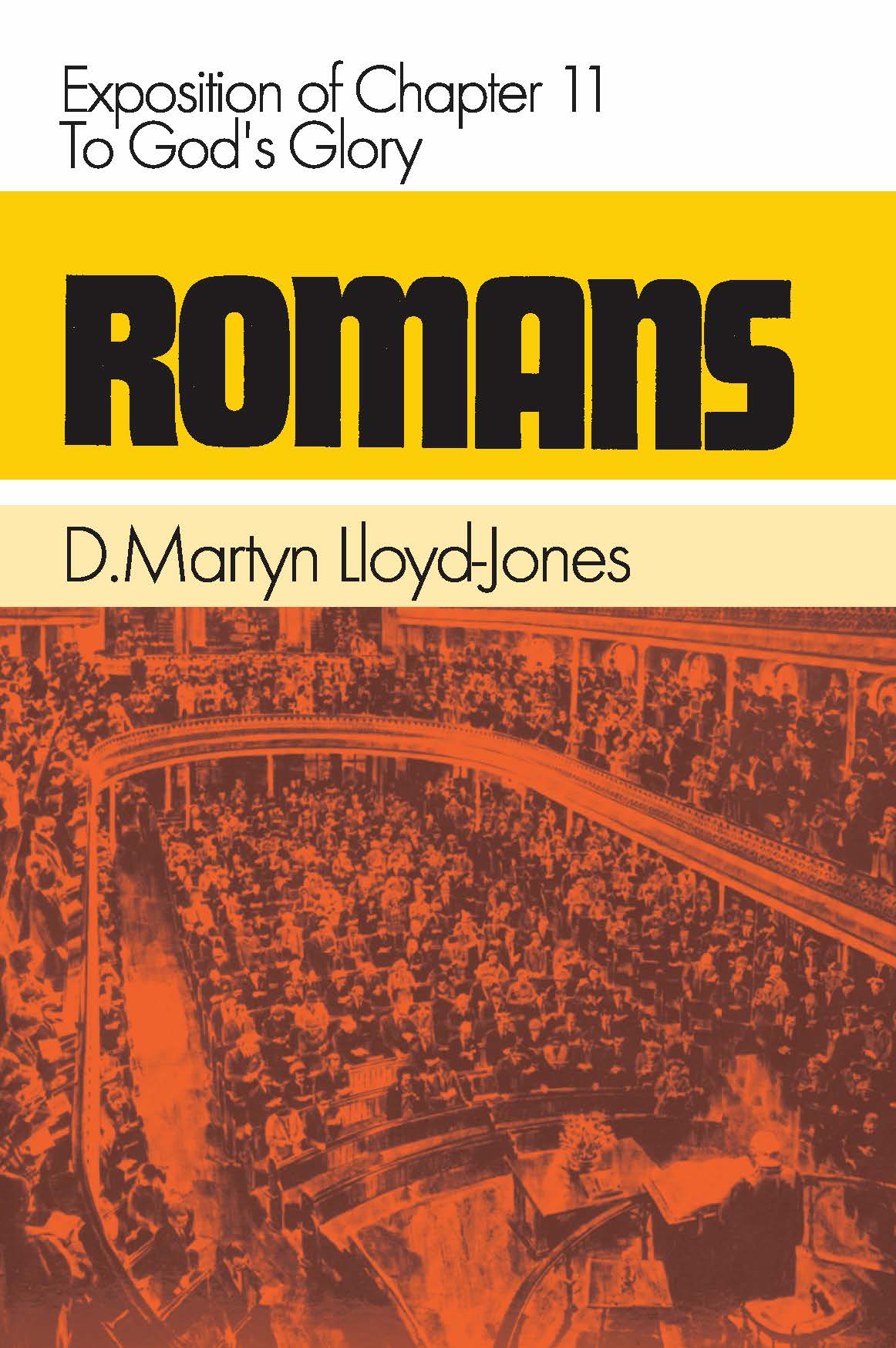
Exposition of Romans chapter 11 - by Martyn Lloyd Jones

Martyn-Lloyd Jones' enthusiasm about this 11th chapter of Romans is evident in every chapter of this book.   My dad likes to point out that the most interesting messages are given by people who are actually interested in what they are speaking about.  Lloyd-Jones is definitely interested and excited about sharing what he has learned in God's word, and so this commentary(a collection of his sermons on this chapter)is very interesting.  In Romans 11 Paul is continuing his explanation of what is going on with the ethnic people God chose, namely the people of Israel, and whether or not God is done with them as an ethnicity.  The majority of Jews were rejecting the Gospel, while most of the people who were responding to the 'call' were  Gentiles.  

Despite his apparently Amillennial views, Lloyd-Jones emphatically rejects the view that the term 'Israel' is speaking of the 'Church' anywhere in this passage.  He explains that it is speaking of the ethnic people descended from Abraham, Isaac and Jacob, and refutes arguments against it.  Here is an overview of his view, he explains this passage as, God is not done with the people of Israel(Paul himself being evidence of this), God has a 'remnant' of Jews, in every age, who are believers.  Lloyd-Jones believes that the Olive tree in this passage is the people of God, and expounds on what Paul is saying in this passage  in his  speaking about how God has cut off the Jews because of their unbelief, and has grafted in 'wild olive branches'/the Gentiles. 

I liked his address of an objection some people might bring up in regards to Paul's warning the Christian Gentiles about becoming arrogant, and the statement, "if thou continue in His goodness: otherwise you too shall be cut off".   Some might think that this passage teaches that a person can lose their salvation.  Lloyd Jones explains that the only persons who will heed the warnings given to Christians are true Christians.  The people who do not care and do not heed the warnings of God prove that they are non-Christians.  I'll give an excerpt here:  "…these passages are ways in which God actually secures the perseverance of His saints and people……The only people who are ever frightened by a statement such as this are true Christian people.  Nobody else.  The whole trouble with these others who think they are Christians - temporary believers, temporary professors, call them what you like - the trouble with them is that they are always self-satisfied, they are perfectly happy, nothing ever disturbs them at all, and they can read through the warnings of the scripture without anything troubling them…..it is through passages similar to this that God ensures and secures the perseverance of His own people.  It is only to His own people He ways, 'Work out your own salvation with fear and trembling', One of the best tests of assurance is that we know something about fear and trembling.  'Knowing the terror of the Lord, we persuade men'.  This is God's way, then, of securing the final perseverance and the ultimate glorification of His people." 

Amongst other things, I disagree with his view that the only future plan God has for ethnic Israel is their spiritual salvation as a whole.  My problem is not with his view that there is coming a day when Israel as a nation will come to believe in Christ, and they will all be saved.  My problem is that he does not believe that when Israel is saved they will dwell in the land of Israel, and that there will be a Millennial reign of Christ on this earth.  "We have given an explanation of what is meant by 'all Israel' but what is meant by 'being saved'?  This is most important.   What Paul is concerned about is the salvation of 'all Israel'.  He does not say anything here about the future of the Jewish nation from any kind of governmental point of view, or even in terms of the land of Palestine.  That is not what he is talking about.  He is talking about its salvation and Jews are going to be saved in exactly the same way as anybody else."  He seems to think that all 'premillennialists' believe that the Jews will be saved by a means other than Christ's sacrifice.  Perhaps some do believe that way, but I do not.  The Jews will be saved the exact same way Gentiles are saved, but when the Jews are saved they will be given the land of Israel that was promised to them forever when they are a righteous people.  They will not become righteous on their own, God will have given them His own Righteousness through Christ, that will fulfill the requirement for their continued residence in the land promised to them(Isa 60:21; Ezek 37:21-28;Deut 32:43…etc.).  

He quotes Charles Hodge, speaking of the correct interpretation of prophecy, "'Great events are foretold but the mode of their occurrence, their details and their consequences can only be learned by the event'…Now history, you see, tells you not only about the great events it gives you the details….Prophecy tells us about the great events that are going to happen, 'but the mode of their occurrence, their details, and their consequences can only be learned by the event' - by when it happens."  He goes on to illustrate this by the prophecies of the Old Testament concerning the Messiah, "All they knew was that there was a promise concerning a Messiah.  But you and I with the Gospels in our hands and the knowledge of the story, look back and read the Old Testament prophecies and see the amazing character of it all, the detailed information that was given: hidden of course at that time, but to us perfectly clear because we are looking at it in retrospect.  That is what Charles Hodge is saying.  He says you must not go to prophecy and expect it to be a sort of detailed account of what is going to happen…The principle, he says, of the interpretation of prophecy therefore is this, that it is concerned with the big things not with the details."  But there were some details given in prophecy, for instance, that the Messiah would be born of a virgin, would come out of Egypt, be born in Bethlehem, would perform miracles…etc.  Of course they didn't know how they would all work out or fit together, but these most definitely were details concerning the Messiah. It is the same with the Premillennial view, we know that Israel will be brought back to the land of Israel,  they will be saved by Christ's sacrifice, they will never disobey again, Christ will reign over them…etc.(Ezek. 37; Jer. 32:38-42; Jer. 31:31-37; Zech 12:10; Rev 20;…etc.)  These are details, we do not know exactly how or when they will happen, but we believe that they will happen. 

Despite the fact that his Amillennial views pop up in various forms throughout the book, despite the fact that he sometimes confuses me when he is citing a view that he is about to critique and at first I think that he is giving his own view, and despite some other disagreements(like his view that Paul changed certain quotations of the Old Testament by inspiration of the Holy Spirit), I still think that this is a good commentary.  I especially liked his review of the doxology at the end of the book.  I'll end with a quote from that section.  Here Lloyd Jones is critiquing people/churches who think that we should have a 'dialogue' with people of other religions, to deal with it as an intellectual debate,  to listen and learn from them.  Rather than being too dogmatic in our belief in the Scriptures as the source of truth, we should be open to their views:  "…Now that is the trouble with modern man.  It is that man, by nature, is sinful, has got a carnal mind, hates God, and the devil whom he unknowingly serves, has blinded the minds of them that believe not.  It does not matter how clever or able he is.  The devil has blinded his mind 'lest the light of the glorious gospel of Christ, who is the image of God, should shine unto them'.  That, according to the Apostle and according to the whole of the scriptural teaching, is the one and only explanation as to why men and women do not believe.  Therefore what have I to learn from such a man?  What has a man who is blinded by the devil got to tell me about these matters?  Why should I have a dialogue with him?  No, no, I am sorry for him.  The man is blinded, he is ignorant, he knows nothing.  I have the knowledge which alone can help him.  It is not mine, it has been given to me, it has been revealed to me, and it is my duty to tell him.  I am doing him a disservice by letting him talk.  He is not capable of expressing an opinion.  He is in the dark, 'dead in trespasses and sins'.  That is the whole of the scriptural teaching.  But, the modern teaching denies this utterly and absolutely, and this is the spectacle by which we are confronted, that the modern church is paying compliments to the unregenerate man and says, 'Now we must preach less to you, we have been speaking too much, let us sit down, you talk, I want to listen, I want to learn from you'.  I do not hesitate to assert that this is a denial of Christ.  Not only do I not learn from the natural unregenerate man, I do not learn from the Hindu or the Muslim, the Confucian or the Buddhist; they have nothing to tell me.  The Bible, and the Bible alone, contains the knowledge and it is given by God….The greatest need in the world tonight is the authoritative proclamation of this one and only gospel." 


Many thanks to The Banner of Truth for sending me a review copy of this book!(My review did not have to be favorable)

This book may be purchased at Amazon and on the Banner of Truth website

Wednesday, August 6, 2014

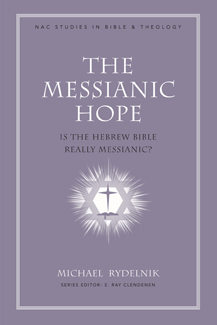
The Messianic Hope: Is the Hebrew Bible Really Messianic? - By Michael Rydelnik

How defensible are Old Testament prophecies of Christ?  If someone came up to you and declares that, in the Hebrew manuscripts of the OT, Psalm 22:16 does not read, "they pierced my hands and my feet," rather, when it is accurately translated it reads, "like a lion are my hands and feet." What would your answer be?  And what if they say that Isaiah 53 was not speaking of a Messiah, but rather of Israel as a suffering servant?  Nowadays, too many Christians believe that many, if not all, of the prophecies of the Messiah are only indirect prophecies, not direct prophecies.  And many Christians might say that these prophecies are allegorically fulfilled, or that it is perfectly alright for the Holy Spirit , in His inspiration of the Apostles, to change His own prophecies.  Others say that many prophecies have a 'double fulfillment', that these prophecies were fulfilled historically, in the prophets' life-time, and that they were fulfilled spiritually by Christ.   

Michael Rydelnik offers the best defense I have read on the topic, arguing for the literal/direct fulfillment of Messianic/end time prophecies.  I was fascinated by his information on Rashi and his followers,  how they influenced, and to some degree instigated, the change from the literal interpretation of the Messianic prophecies, to interpreting these prophecies as having historical fulfillments in the time they were prophesied. In doing this, they countered the Christians' proof texts that Jesus is the Christ.  These Jews' claimed to be using a literal hermeneutic, and that the literal interpretation of these prophecies was to view them as historically fulfilled.  For instance, Isaiah 7:14 is speaking of a woman in Isaiah's day, most likely Isaiah's wife, who will have a baby, it is not speaking about a virgin birth.  This method of interpretation was eventually picked up by the church, and now, "As a result, much of contemporary, Christian interpretation uses anti-Christian Jewish polemic to interpret messianic passages of the Hebrew Scriptures."  And Christians try to apply them to the Messiah by saying that these prophecies had double fulfillments, that their primary fulfillment was their literal fulfillment in the days they were spoken, but that they have a secondary spiritual fulfillment in Christ.   

 Rydelnik is also very good in his explanation of the Masoretic Text(the Hebrew text our modern Old Testaments are based upon) and his defense of ancient versions of the Old Testament:  "…the Masoretic Text is a post-Christian, Jewish version of the Old Testament.  As such, it reflects the theological perspective of post-Christian, rabbinic Judaism.  Thus, there are several significant examples of the Masoretic Text interpreting Old Testament messianic texts in a distinctly nonmmessianic (or historical) fashion, whereas other ancient versions interpret the same texts as referring to the Messiah." He goes on to show some examples of where the Masorites changed the text, talking about how the ancient Greek translation of the Hebrew Bible(and other translations) reads the same passages Messianically rather than historically.  For instance, the Greek OT translation of Psalm 22:16 reads, "they pierced my hands and feet" rather than, "like/as a lion are my hands and feet".  He explains how obscure the Hebrew is vs. the Greek which makes more grammatical sense.  He counters the view that we should go with the Hebrew since it is the "harder reading" by the statement, "…defining the harder reading depends on the audience reading it.  For a Masorete, 'they pierced my hands and my feet,' a seeming prediction of the Messiah's crucifixion, would certainly have been the harder reading."  And he also notes that in 1997 a Hebrew fragment of the book of Psalms was found, dated "between AD 50-68" containing this Psalm and it reads "they pierced".  Rydelnik ends up stating that, "The careful interpreter of messianic prophecy should be aware of text critical issues because these predictions may be buried in the Hebrew Bible's critical apparatus rather than in the Masoretic Text itself."   

My only real problem with this book is that Rydelnik doesn't believe that certain texts were actual prophecies.  For example, he believes that Matthew 2:15, where Matthew states events that "fulfill" Hosea 11:1,"Out of Egypt I have called my Son", is a typological fulfillment, because he believes this passages was actually speaking of Israel.  I disagree here, and think that John Gill has a better answer, that the passage actually is speaking of Christ, and that it(Hosea 11:1) can be interpreted/read something like this, "Because of God's love for Israel, He has called His Son out of Egypt."  Israel and her King were rebellious, and the King of Israel was 'disowned', 'cut off' or 'cast out'(chpt.10:15) but God loves Israel so He will call His own  Son out of Egypt to be their King.  I don't believe, as the author does, that Numbers 23-24 establishes 'Israel' as a valid 'type' of the Messiah, I don't believe that it makes Israel a type of the Messiah at all.  You see Him coming out of/from the people of Israel(Num. 24:17,19), but I do not see that He is called 'Israel'.  I believe that Rydelnik's excellent comments on Psalm 110 apply here:  "If one presupposes that there are no direct messianic predictions or any concept of a Messiah in the Hebrew Bible, then certainly it would be necessary to look for alternative interpretations of Psalm 110.  However, if there is a good reason to presuppose that the Psalms are indeed messianic, then this will yield a messianic explanation of the psalm."   I believe that we have good reason to believe that Hosea 11:1 is Messianic, and so we ought to look for an 'alternative interpretation that yields a direct Messianic meaning, rather than just settling for the view that the verse is not essentially Messianic.  If an Apostle appears to view a passage as being literally fulfilled, I believe that we should presuppose that the passage is directly Messianic. Knowing that the Apostles had much older copies of the Old Testament than we do should also bias us towards them, and make us less biased towards our own limited modern textual assortment of manuscripts and supposed superiority of our own modern manuscripts and interpretations.   

Despite my disagreements, I consider this  a GREAT book on the topic of Messianic prophecy and an excellent source of information on textual criticism of the Hebrew Bible and on modern interpretations of the Old Testament.  Even the conclusion is great.  He ends with an example of the Scriptures Accomplishing God's purposes at a time when he failed in his presentation/defense of them.   I am very pleased that Rydelnik has a bias towards the authority, inspiration and literal-grammatical-historical interpretation God's Word;  that type of bias is sadly declining/has declined in 'Christian' circles.  I highly recommend this book. If you are studying prophecies of Christ, or just want more information on their interpretation, get this book!


Many thanks to B&H publishing group for sending me a free review copy of this book. (My review did not have to be favorable)
 
this book may be purchased on Amazon.com

Wednesday, July 9, 2014

A Commentary on the Psalms v.2 - By Allen P. Ross

It is odd, at least to me, to find a commentary that is both exegetical and Premillennial.   Normally exegetical/linguistic commentaries are really good with their linguistics, and much of their basic exegesis, but are Amillennial, Covenantal and overly typological.  And to my knowledge, most premillennial commentaries are not exegetical/linguistic commentaries but more of the devotional/light type, and like the Covenantal commentaries, are too typological in their views of certain texts.    This commentary on the Psalms, by Allen Ross, is a very refreshing find in that it is both exegetical and Premillennial, and if anything, tries a little too hard not to be typological, focusing on examining the text for what it says. 
Each examination of a Psalm starts out with the Psalm itself, and underneath the Psalm, one of my favorite features, LOTS of footnotes containing textual variants from other manuscripts, such as the Greek version, Symmachus, the Syriac, Targums and other sources. These footnotes discuss the differences between the  Masoretic text and other manuscripts and sometimes explains  why the author favors one rendering over another.     

Next we are brought to examine the "composition and context" of the Psalm, and eventually we will end up at an outline of the Psalm, which happens to be another feature that I like.  Following the outline, we come to "Commentary in Expository Form" which delves into the meaning of Psalm in more detail.  This part deals with the verses in groupings with  headings, such as "The Righteous must not be troubled by the pomp of this world because it cannot redeem and it cannot survive death(5-12)."  This section also has many footnotes, and some rather long ones too, which delve further into discussion of various word meanings and other things about the  verses in question.  And finally, we end with a look at the "message and application" of the Psalm.

My only real qualms with Mr. Ross is that, as I mentioned before, he seems to be a little too careful about not coming to conclusions about whether a Psalm, or verse or two of a Psalm, is prophetic or not.  For example, Psalm 45 vs. 6-7 reads:

"Your throne, O God, is for ever and ever; an upright scepter is the scepter of your kingdom.  You love righteousness and hate wickedness; therefore God, your God, has anointed you with the oil of rejoicing over your companions…." Part of Ross' commentary on these verses is that, "In Israel the king was never considered divine.  He might be called 'God' as in this psalm, but only because he his vice-regent in the theocracy…It was an easy step for the New Testament writers to apply this passage to Jesus the Messiah, who they were convinced was divine."  That makes it sound like the writers of the New Testament simply looked for verses that they could apply to the Messiah, rather than using actual proof texts.  When the New Testament writers look on a verse as a solid proof text, we should defer to them and assume it was/is such, rather than that they just looked for just looked for similarities to the Messiah in the Old Testament to  use in their defense of the Messiahship of Jesus.   That wouldn't be a solid biblical stance on the Apostles' part, they could have been answered very easily by the Jews that the text wasn't really speaking about the Messiah, and all that they could say in defense of their usage of the verse was that, though it was not speaking of the Messiah, it sounded a lot like the One they(the Apostles) claimed to be the Messiah so they applied it to Him.  Now, this Psalm was quoted in the epistle to the Hebrews, defending and explaining the Messiahship of Christ, and His perfect salvation. But this commentary makes it sound as though the Jews were to be convinced by the Apostles application of the Psalm to Jesus, not by the Psalm as a prophetic text speaking of Jesus, the Divine Messiah Himself. I can't buy that. 

But aside from things like what I just mentioned, the commentary is rather good, and really does give some good insights into the text.  I am pleased with it.


Many thanks to Kregel Academic for sending me a free review copy of this book!(My review did not have to be favorable)
 
This book may also be purchased at Amazon

Tuesday, October 1, 2013

When God Spoke Greek - By Timothy Michael Law

What Bible did the Apostles use to teach and evangelize the Gentiles and Hellenized Jews who spoke Greek?  What did they use when they wrote their epistles?  Many of them(if not all) used a Greek translation of the Hebrew, commonly called The Septuagint.  In this book the author, Timothy Michael Law,  explains the Septuagint's possible origins and talks about the significant differences that are found between this translation and the text of Hebrew manuscripts that we can reference.   This part of the book was what I was most looking forward to, where he would deal with the Apostles quotations from this version against what our Hebrew text says.  One of the most significant examples is found in the book of Hebrews, chapter 10 verse 5, where the writer is proving the sufficiency and necessity of Christ's sacrifice by quoting a portion of Psalm 40:  "Wherefore when he cometh into the world, he saith, Sacrifice and offering thou wouldest not, But a BODY didst thou prepare for me…"(Heb 10:5 ASV emphasis added)But if you turn to Psalm 40:6 in basically any Old Testament of a Christian Bible, or any Tanakh(vs. 7 in the JPS), It will read something along these lines:  "Sacrifice and offering thou hast no delight in; MINE EARS HAST THOU OPENED: Burnt-offering and sin-offering hast thou not required."(Psa 40:6 ASV emphasis added) This rendition takes away the prophetic statement about the Messiah's coming in the flesh.  So either the translators of the Septuagint mistranslated this verse or someone miscopied the Hebrew, and I believe it to be the latter case. As Law explains, "The Hebrew Bible in the editions we now use is often not the oldest form of the Hebrew text…in many cases the Septuagint provides the only access we have to the oldest form." 

Timothy Law is pushing for a greater knowledge of the Septuagint amongst Christians, it being the Bible of the Apostles and of the early Church.   As Law states, "The prejudice in the contemporary Church in favor of the rabbinic Hebrew Bible is startling, but not unexpected given that Christian educational institutions teach future scholars and clergy the Old Testament exclusively from the Hebrew Bible, relegating the Septuagint to the sidelines of an upper-level elective course.  Students thus graduate from schools that teach Christian history and theology without ever considering that the scriptures used by the New Testament writers and the first Old Testament of the Church is not the Hebrew Bible they spent time and money to study."  I completely concur with him in this, but our assumptions move on from that belief in contradictory ways. Having been looking into the Apostles' use of the Septuagint for a year or two now, I was very excited about this book, but have been disappointed to a degree that I did not expect.  This may sound odd, but I was extremely disappointed that Timothy Law turned out to be unbiased towards the Apostle's(I thought he was a professing Christian).  From the beginning of the book and on the reader will  find statements like this, "We can also see that the New testament authors sometimes use Septuagint readings we know to be mistranslations of the Hebrew, an unsettling reality but a reality nonetheless." and again, "….it is not insignificant that the apostle Paul and his later interpreters in the early church will employ these mistranslations in the reformation of Christian theology." 

Mr. Law contradicts himself by those statements. He talks about how there was a plurality of variant readings in the Biblical texts in the days of the Apostles and so they could "choose whichever reading best suited their purposes to open up new avenues for biblical interpretation"but makes statements like "We also sometimes see the New Testament authors quoting what is unquestionably the Septuagint's mistranslation of the Hebrew, which is not to say they are 'wrong' by doing so…"  These statements are quite confusing…the Apostles were right to use an 'unquestionably wrong' translation from a random manuscript among an alleged plurality of texts, any one of which could be right?  And yet, despite not knowing what Hebrew manuscript the LXX translators used, and apparently ignoring the fact of the admitted antiquity of these translators' manuscripts,  Mr. Law makes a judgment call and says they were wrong.  I don't buy it.  And also  his statements about Matthew's use of the prophecy of the virgin birth are shocking(Matt 1:23, Isa. 7:14):  "The Greek Septuagint and not the Hebrew Bible gives Matthew the textual 'proof' to connect Jesus to the prophecy."  And this conclusion is apparently reached because the Hebrew word in our Hebrew texts allegedly does not mean 'virgin' but 'young girl', and since WE don't know of any ancient Hebrew manuscripts that read 'virgin' then the LXX translators didn't have one either.  Again, this reasoning is absurd.  Law states, "they were told in Greek that Jesus fulfilled the Greek Jewish scriptures, the Septuagint."  And we are just supposed to assume that the majority of Hebrew texts(or all of them) in the days of Christ and the Apostles did not support Christianity. 

Mr. Law seems to be okay with the idea that Christ and the Apostles fabricated Christianity, but I am not.  And therefore, I cannot recommend this book.   

I am very grateful to Oxford University Press for the review copy of this book(my review did not have to be favorable), and am very disappointed that I could not give it a good review. 

Monday, September 16, 2013

NIV Integrated Study Bible

I have followed some chronological Bible reading plans before, but have never used a Chronological Bible, so this is my first one and I am delighted with it. It has several timelines and also a timeline across the bottom of every page indicating what year, or approximate year, you are in at whatever point you are at in your reading.

 As example of how this type of Bible arrangement works: when you reach the book of Acts and are reading at the time the letter to Galatians was probably written, the book of Galatians is inserted 'into', as it were, the book of Acts and you read it as a part of the account instead of as a separate book. It is so nice not to have to keep turning back and forth every few minutes in order to read chronologically, instead you can just read right through, simply turning one page after another. When you are done, you can just place a bookmark where you stopped instead of having to mark the spot on a reading chart when you are done. So convenient!  

Not only is this chronological, it also uses a parallel column format at times.  For instance, since the four Gospels recount some of the same events, instead of placing them one right after another, these chronologically 'parallel' accounts are placed side by side in two, three, or even four columns. Oh, and be sure to read the introduction to this Bible first. I did not do this at first and thus had a misconception for a while that the people who arranged this Bible were fudging the chronological aspect by placing the repetition of the law that was given when Israel is finally about to enter the promised land, parallel to the first giving of the law about forty years earlier. Later on I examined their arrangement again, and found that they actually repeated this recounting of the law when it is reached at the correct time. If I had read the introduction first I would have found that they use 'conceptual parallels' and not just chronological parallels: "Conceptual parallels occur primarily in the books of Moses when similar commands and instructions are repeated in different historical settings…In order to keep genealogies and conceptual parallels in their historical setting, they are repeated whenever they appear in the chronological presentation…" Conceptual parallels are indicated by a light grey title instead of the normal solid black title.

The text of the NIV 2011 seems fine so far, though I know there has been some concern over the rendering of some verses, such as changing New Testament epistles addressed to 'brothers'  as 'brothers and sisters'. I don't really like that rendering and would prefer a more literal translation, but can overlook it in this instance and substitute the correct wording in my head(i.e. 'brothers').  With other verses I'll just need to look at the more literal translations. Daniel Wallace(professor of New Testament Studies at Dallas Theological Seminary) has some articles on his blog critiquing the new NIV that you may find interesting.  I do LOVE that they still have the footnotes that the old NIV had, regarding different renderings of verses in the Septuagint, the Dead Sea Scrolls and other manuscripts in the Old Testament and New Testament as well.


All in all, I like the chronological format of this Bible, and though I wouldn't recommend it as a primary study Bible, it is very convenient and interesting.  It would be nice if they would come out with an NASB version as well...

Thanks to BookSneeze® and Zondervan for sending me a free review copy of this book!(My Review did not have to be favorable)

This Bible may also be purchased at Amazon


Monday, February 25, 2013

Old Testament Quotations in the New Testament


Want a book that compares nearly all(or perhaps all) New Testament quotations of the Old?  Old Testament quotations in the New Testament by Gleason L. Archer and Gregory Chirichigno does that in a chart form.  Made up of nearly a hundred and seventy pages of charts made up of four columns on two large pages. The first column gives the Masoretic text of the verse, the second gives the Septuagint rendering, the third gives the New Testament quotation of the verse and the fourth offers commentary on  the differences.  Now, keep in mind that each of these texts are given in their original languages, not in English.   English is used in the introductions ,instructions and commentary(which also translates some of the texts).  Now, I don't know Hebrew and am just learning Koine Greek, but I still find this book very useful.  Since all of the text references are given in English, I can look up and compare the English verses in the Old and New Testaments, and use my English translations of the Septuagint.  I also used the free Bible program E-Sword with which you may download free Bibles, including ones Keyed to Strong's(such as the Apostolic Bible Polyglot LXX).

What I didn't like about this book was the unapologetic bias towards the Masoretic Text(The late Hebrew text that most of our English Old Testaments are based upon).  The New Testament quotations of the Old are generally held up to the Masoretic Text as the judge of their accuracy.   And so we end up with statements like this:  ""But perhaps Paul was content to let the insertion stand (even though he knew it was not in the Hebrew text) because…"  What if the 'insertion' wasn't an insertion at all, but actually a part of the Hebrew text of Paul's day?

And when the Septuagint(the Greek translation of the Hebrew Old Testament aka the LXX) is quoted in the New testament and when it differs from the MT, often apologetic commentary like this is used, speaking of the quotation of part of  Isaiah 53 in Acts 8:32-33:  "Here we have a gravely deviant translation quoted from the LXX.  This, however, poses no problem for biblical inerrancy, since Acts 8 simply records the wording of the LXX which the Ethiopian  eunuch was reading.  There is no apostolic approval or endorsement of the errors in his rendition, and no doctrinal teaching is built upon them….enough of the truth of Isaiah 53 came through, even in this somewhat defective translation, to lead the Ethiopian to a saving knowledge of Christ.  This furnishes a classic example, incidentally, of the missionary strategy used by the early apostles in making the best use they could of the Septuagint - which with all of its faults was still the only form of the OT available to Diaspora Jews and to the Gentile converts." The quotations from the Septuagint are older than our Hebrew text of today, wouldn't we be more biased towards the Apostle's quotations rather than making our approx. eight or nine hundred years later Hebrew text the judge?  There are a few places where the commentary concedes that the quotation of the Apostles may actually be the correct quotation of the Old Testament, but not half as many concessions as I would like.

I still would recommend it though, simply for the collection of references or allusions to the Old Testament in the New.

Thanks to  Wipf and Stock Publishers for sending me a free copy of this book to review(My review did not have to be favorable)!

This book may be purchased at Amazon.com and at Wipf and Stock Publishers

Wednesday, August 22, 2012

The Open Bible NKJV


This is my first time using one of Thomas Nelson's "Open Bibles", and although not my ideal version of a study Bible(I haven't found the ideal yet),it has some elements  that I would want.  My favorite feature of this 'Open Bible' is the way the cross-references are interspersed throughout the text, immediately following the verses to be cross referenced, instead of being in a middle column where it takes more time to find them.    I must admit, though it may seem weird, I love this feature!  I like seeing the references(and related/supporting verses) WHILE reading the passages, instead of having to stop, notice the verse reference I'm currently on, and then locate it in a center column in order to find the cross references.  In this Bible they're right there 'in' the passage as you're reading along, thus the "Read-Along References". 

The introductions and outlines of each book of the Bible are a nice feature, giving you a high level over-view of each one before you delve into it.  I also like the charts in the "visual survey of the Bible", especially in regards to the division of Israel and Judah.  It has timelines, and shows who was a prophet to which Kingdom and when, and also has the Kings of Israel and Judah listed in parallel columns. 

Though this Bible has some manuscript variants listed, it doesn't have as many as I'd like.  For instance, when you come to Psalm 40 verse 6, "Sacrifice and offering You did not desire, My ears You have opened."  Despite there being a reference to Hebrews 10:5-9, there is no footnote giving the LXX rendering of the verse "Sacrifice and offering You did not desire, but a body You have prepared for Me" which version is quoted by the author of Hebrews. 

I would recommend the Open Bible as an excellent cross reference tool, a great addition to any study Bible collection.   To expound on what I said earlier, my personal ideal of a study Bible would be a mix of the Open Bible(it's Outlines, "Read-along References" and charts), the Zodhiates Hebrew-Greek Key Word Study Bible, The Apostolic Polyglot Bible(for the keyed LXX), and the NIV(the surprisingly large listing of textual variants, though I would like more). 

  I received this book as a complimentary copy from BookSneeze® in exchange for my review(which does not have to be favorable).

 I review for BookSneeze®